The one kitchen tool that changed everything
Baking, for whatever reason, is one hobby that people seem to assume requires a talent that you’re either born with or you’re not. In reality, it’s a skill you can develop like any other with time, patience, and practice. Yes, baking can be finicky and quite a bit more sensitive than cooking generally is, but ultimately it boils down to accuracy and attention to detail.
There’s lots of advice I would give to beginner bakers that I’ve learned either from experience or from the expertise of others. Ingredient quality is crucial, the temperature of your butter actually does matter, and you can’t always trust that your oven is heated to the temperature it claims to be. If there’s one baking tip that I would give above all else, though, it would be this: weigh your ingredients!
Measuring Ingredients by Weight
This will likely come as no surprise to bakers in countries other than the United States, but I, like all other Americans, grew up on measuring cups and tablespoons. I remember the first time I encountered a recipe that included only measurements by weight and not by volume – it was like reading a foreign language. I quickly closed the recipe, confident in my conclusion that such a thing could only be attempted by professionals who’ve been to pastry school.
All this changed when I met my now husband. He’s never been one to bake much of anything, but he does take coffee very seriously, and as a result, introduced me to his kitchen scale (weighing out coffee beans is a crucial step in preparing well-made espresso). Much to my surprise, I found that weighing out ingredients using a large bowl on top of the scale, taring as I go, was easier, faster, and cleaner than measuring by volume had ever been.
Turns out, good bakers already knew this. Extreme accuracy in measuring ingredients is probably not so important for a simple cookie recipe, but it can make a world of difference for baked goods that are more structurally sensitive like layer cakes, macarons, and souffles. Dry ingredients like flour are notoriously difficult to measure accurately by volume, which can throw off the chemical processes that happen in baking leading to a subpar result. By using a kitchen scale to measure everything out by weight, you’re eliminating the possibility that incorrectly measured ingredients are throwing off your recipe.
Once you’ve transitioned to baking by weight, you’re also more capable of weeding out poorly written recipes. A baking recipe written with both volume measurements and weights (in grams) is usually a sign that the recipe writer knows what they’re talking about. If the recipe doesn’t accommodate bakers using a kitchen scale, you may want to try out another recipe.
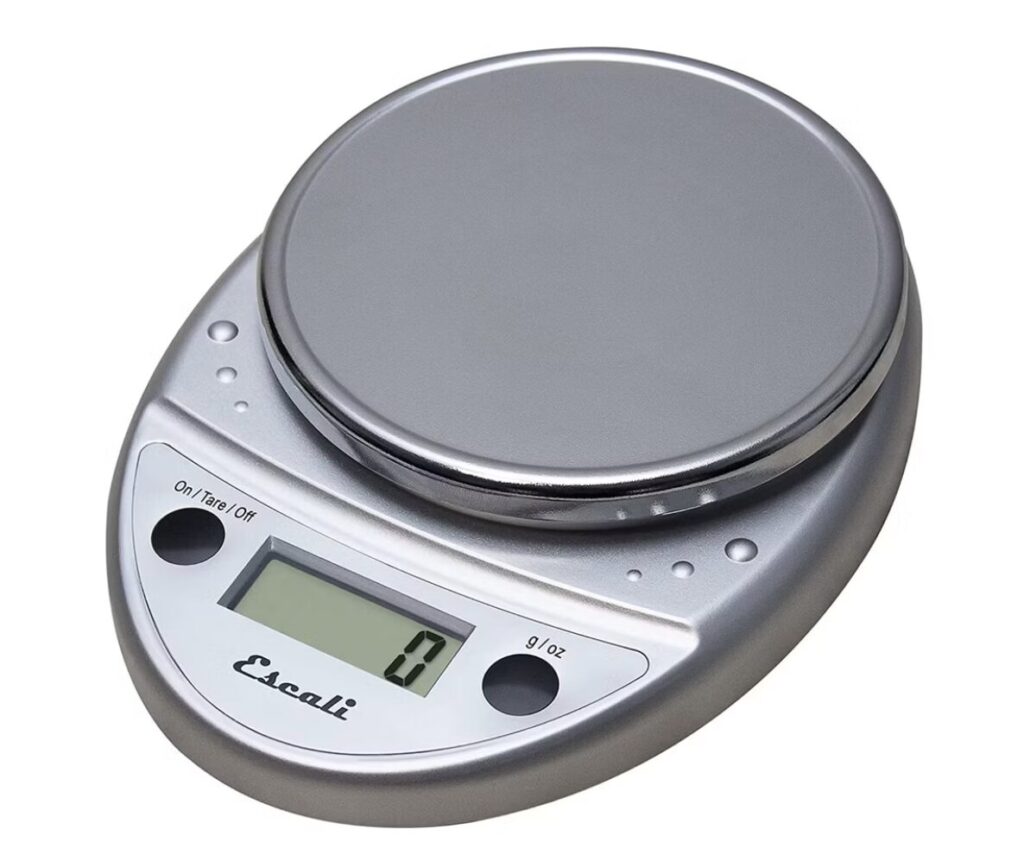
Below, I’ve included links to a couple of well-rated kitchen scales I would recommend. As long as you use it only as intended (i.e. to measure ingredients) it should last you a lifetime and transform your ability to follow recipes with accuracy. Again, I have found this to be most helpful in baking but it can make a huge difference when cooking as well, so there will be no shortage of opportunities to make use of this kitchen tool.
Recommended Scales

Happy baking!
Leave a Reply